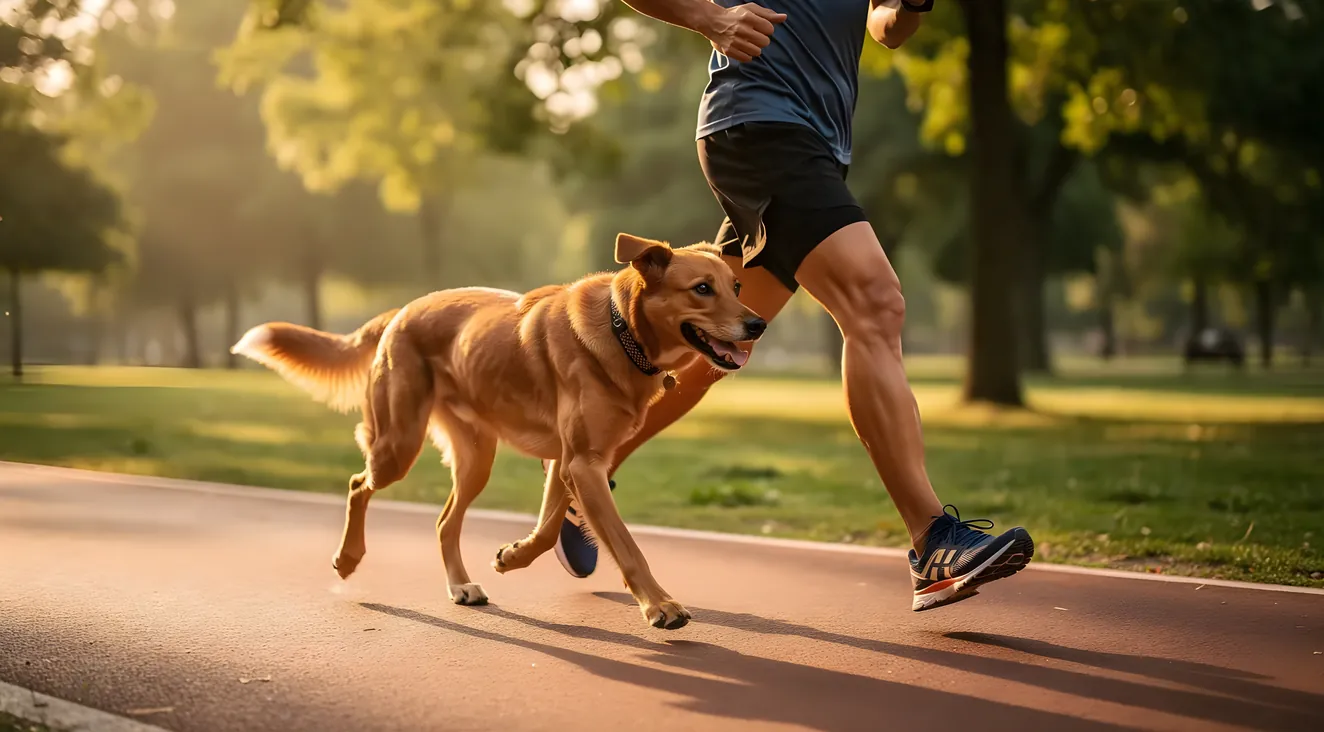
How Regular Dog Walks Improve Your Dog's Health
The benefits of dog walking go a lot deeper than burning off energy. A daily walk supports your dog's heart, joints, muscles, and immune system all at once, and the effects compound over months and years. A dog who walks regularly tends to carry a healthier weight, move more comfortably into old age, and recover faster from minor illness than one who spends most of the day on the couch. None of that requires marathon distances. It just requires consistency.
A Stronger Heart and Better Circulation
Walking is aerobic exercise, and a dog's cardiovascular system responds to it the same way a person's does. Regular walks strengthen the heart muscle, improve circulation, and help keep blood pressure in a healthy range. Dogs that get consistent aerobic activity also tend to have better oxygen delivery to their tissues, which shows up as more stamina during play and less panting after routine activity.
This matters more as dogs age. A senior dog whose heart has been conditioned by years of regular walks generally handles minor cardiac changes better than one whose heart has done very little sustained work. You're not training for a race. You're keeping a muscle in use that otherwise weakens from disuse, just like any other muscle in the body.
Healthier Joints and More Flexibility
Movement lubricates joints. When a dog walks, synovial fluid circulates through the joint capsules, delivering nutrients to cartilage and carrying away waste products. Dogs who stay sedentary for long stretches often develop stiffer joints and less range of motion, even before arthritis becomes a factor.
Walking also supports the connective tissue around joints, including ligaments and tendons, by keeping them pliable under light, repeated load. This is especially important for breeds prone to hip or elbow issues, where maintaining strength in the surrounding muscles takes pressure off the joint itself. Owners of large-breed dogs sometimes worry that walking will wear down aging joints faster, but low-impact walking is generally the opposite of the problem. It's high-impact activity, like jumping from heights or hard sprinting on pavement, that tends to stress joints more than a steady walk does.
Muscle Tone That Keeps Your Dog Steady
A dog's muscles need regular use to stay strong, and walking works nearly every major muscle group: the legs, the core, and even the muscles that stabilize the spine. Good muscle tone isn't just about appearance. It's what keeps a dog balanced on uneven ground, steady going up and down stairs, and less prone to strains during normal play.
Dogs who lose muscle mass from inactivity are also more vulnerable to injury. A pulled muscle that a well-conditioned dog would shake off can become a real setback for a dog whose muscles haven't been asked to do much. Regular walking is one of the simplest ways to keep that baseline strength in place without any special equipment or structured workout.
A More Resilient Immune System
Exercise supports immune function in dogs in much the same way it does in people. Moderate, regular activity helps regulate stress hormones like cortisol, which in excess can suppress immune response over time. Dogs who get consistent walks also tend to sleep better, and quality sleep plays its own role in keeping the immune system functioning well.
There's a practical side to this too. Time outside exposes a dog's immune system to a normal range of everyday microbes, which is part of healthy immune development, especially in younger dogs. A dog that never leaves a controlled indoor environment misses out on that exposure entirely.
How Much Exercise Does Your Dog Actually Need?
Exercise needs vary widely by size, breed, and age, so there's no single number that fits every dog.
Small breeds (under 20 pounds) often do well with two shorter walks a day, totaling 20 to 30 minutes, though some small terriers and spaniels have surprisingly high energy needs.
Medium breeds (20 to 50 pounds) typically need 30 to 60 minutes of daily activity, split across one or two walks.
Large and working breeds (over 50 pounds, especially herding and sporting breeds) often need 60 minutes or more, and many do better with a mix of walking and off-leash play or a longer adventure walk.
Puppies need shorter, more frequent walks that match their developing joints, while senior dogs usually do best with gentler, more frequent walks rather than one long outing.
Breed matters as much as size. A Border Collie and a Bulldog of similar weight have very different exercise requirements, so it's worth researching your dog's specific breed tendencies rather than relying on size alone.
Signs Your Dog Isn't Getting Enough Exercise
An under-exercised dog usually shows it. Watch for restlessness in the evening, destructive chewing, excessive barking, or a dog who seems to have endless energy no matter how long you've been home. Weight gain is another common sign, along with a dog who seems reluctant to settle down or who paces.
Some dogs show it physically instead of behaviorally: soft, poor muscle tone, stiffness after getting up from rest, or a general lack of enthusiasm for activities they used to enjoy. If you're noticing any of these patterns, a more consistent walking routine is often the simplest fix.
If your schedule makes it hard to walk your dog as often as their size and breed call for, a professional dog walker can fill in the gaps with the same consistency your dog would get from you. Pair a solid walking routine with attention to weight management and your dog's mental stimulation, and you're covering most of what keeps a dog healthy long term. For the full picture of what walking does for dogs beyond physical health, visit our benefits hub.
Frequently Asked Questions
How many minutes a day should I walk my dog?
Most adult dogs do well with 30 to 60 minutes of daily walking, though small breeds may need less and high-energy working breeds often need more. Splitting the time into two walks usually works better than one long session.
Can walking help an overweight dog lose weight?
Yes, walking is one of the most effective and lowest-risk ways to help a dog lose excess weight, especially when paired with portion control. Because it's low-impact, it puts less strain on joints than more intense exercise while still burning calories consistently.
Is it bad to skip my dog's walk some days?
An occasional missed walk isn't a problem, but dogs benefit most from consistency. Skipping walks regularly tends to show up as weight gain, restlessness, or behavior issues over a few weeks.
Do indoor dogs still need walks?
Yes. Indoor play helps, but it rarely provides the same sustained cardiovascular exercise or joint movement as a walk, and it doesn't offer the mental stimulation that comes from a new environment.
At what age should I start walking my puppy?
Puppies can start short, gentle walks once they're fully vaccinated, usually around 4 months, though the exact timing depends on your vet's guidance. Keep early walks brief and let the puppy set the pace.
How do I know if my senior dog is still getting enough exercise?
Watch for stiffness after rest, reluctance to go up stairs, or weight gain, all signs that gentle, frequent walks may need to increase rather than decrease as your dog ages.
Does walking help with joint problems like arthritis?
Low-impact walking can help maintain muscle support around arthritic joints and keep them from stiffening further, though the right amount and pace should be guided by your veterinarian for dogs with an existing diagnosis.