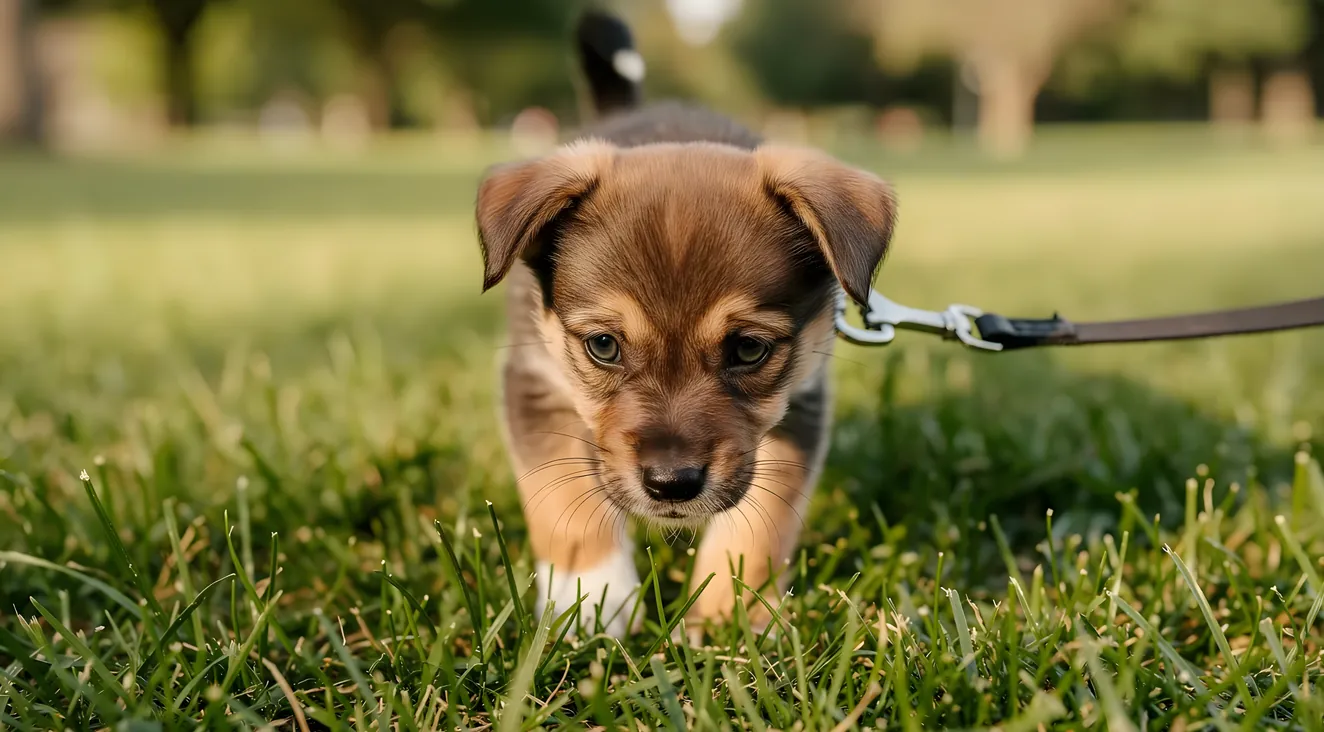
Puppy Walks in Melissa, TX
A puppy's first walks aren't really about exercise. They're the foundation for how your dog will move through the world for years: how it handles a leash, how it reacts to a stranger on a porch, whether it can pass another dog without losing its mind. Getting those early walks right matters more than most new owners expect, and it's exactly why puppy walks look so different from a standard adult dog walk.
Why Puppies Need Shorter, Different Walks
An adult Labrador can handle a brisk 30-minute loop without much trouble. A four-month-old puppy shouldn't be doing that, and not only because puppies tire out faster. Young dogs have developing joints and growth plates that haven't finished forming, and repeated stress on hard pavement during that window can cause real problems later. A common guideline among veterinarians is roughly five minutes of structured walking per month of age, up to twice a day, so a 12-week-old puppy is usually looking at 15-minute outings rather than an hour-long trek.
Short doesn't mean uneventful. A 15-minute walk with a curious eight-week-old covers plenty of ground mentally. Every smell is new. Every passing car is worth investigating. Every friendly stranger is a socialization opportunity. That mental workload tires a puppy out in its own right, often faster than the physical distance does.
Vaccination Timing and When It's Safe to Start
One of the trickier questions Melissa puppy owners run into is when it's actually safe to start walking outside. Puppies don't reach full immunity until they've completed their vaccination series, typically around 16 weeks, and walking through areas where unfamiliar dogs pass through before that point carries real risk.
At the same time, waiting until full vaccination to introduce any outside exposure has its own cost. The socialization window, the stretch when puppies most readily adapt to new experiences, tends to close around 12 to 14 weeks. Missing it entirely because you played it too safe isn't the goal either.
Most vets land on a middle path: controlled, lower-risk exposure before the vaccine series wraps up. That might mean carrying your puppy through areas where unknown dogs congregate rather than letting paws touch the ground, walking in your own yard, or visiting homes of dogs you know are current on shots. A dog walker who works with puppies should ask about vaccination status before a first visit. That question is a good sign they're taking the responsibility seriously.
Leash Training Happens on Every Walk
Walking an adult dog that already knows leash manners is a completely different job than introducing a 10-week-old to a leash for the first time. Puppy walks double as training sessions that happen to involve moving through a neighborhood.
A walker experienced with young dogs keeps those early sessions positive: loose leash walking, pausing rather than yanking when a puppy pulls, rewarding check-ins, and keeping the pace relaxed instead of rushed. None of that is complicated, but it takes patience that an adult-dog walk simply doesn't require. If someone else is walking your puppy while you're at work, they're shaping leash habits during some of the most impressionable weeks of your dog's life, so it's worth asking directly about their approach before booking.
Socialization Before the Window Closes
Socialization isn't about how many dogs your puppy meets. It's about the quality of those early introductions. A puppy that has calm, positive experiences with people, sounds, and other animals before 14 weeks tends to grow into a more confident, adaptable adult.
Neighborhood walks through Melissa's residential streets, especially in areas with steady foot traffic like Liberty, expose puppies to kids on bikes, delivery trucks, strollers, and the general noise of a community. Handled calmly by someone the puppy already trusts, those encounters do real developmental work that's hard to replicate any other way.
Reading a Puppy's Energy
Puppies have a reputation for boundless energy, but that energy tends to arrive in short, intense bursts rather than steady endurance. A puppy might sprint around the yard for five minutes and then crash for a two-hour nap, and that pattern is completely normal.
Structured walks channel that burst energy productively. Mental stimulation from sniffing and investigating new surroundings often tires a puppy out more than raw distance does. Overwalking is a genuine risk with an enthusiastic puppy that seems eager to keep going. A good walker watches for fatigue signs, lagging behind, lying down mid-walk, heavier panting than usual, and stops before those signs show up.
What a Puppy-Focused Walker Handles Differently
A walker who mostly handles adult dogs isn't automatically equipped for puppies. With a puppy, a walker is also managing duration limits tied to age, vaccination status and where it's safe to go, socialization quality rather than just exposure, basic leash reinforcement on every outing, and fatigue monitoring that requires cutting a walk short before a puppy pushes past its limit.
Not every Melissa dog walker has hands-on experience with young dogs, which is fine, since adult dog walking and puppy care really are different skill sets. If your dog is better suited to one-on-one attention during this stage, it's worth filtering specifically for walkers who list puppy experience rather than assuming any walker can handle it.
Starting Your Puppy Off Right in Melissa
Most puppies are ready for their first professional walk shortly after a vet clears them for neighborhood outings, generally once the vaccination series wraps up around 16 weeks. Starting a relationship with a walker early builds trust and routine, so that by the time your puppy has more energy and pull strength, they already have a working rapport with someone who knows their patterns.
Understanding what good early socialization actually does for a dog's long-term temperament is worth reading before you start shopping for a walker. Our dog socialization resource goes deeper into the developmental case for it. When you're ready to compare options, browse the full directory of Melissa dog walking services to find someone experienced with young dogs.
Frequently Asked Questions
At what age can I start walking my puppy outside?
Most vets recommend controlled exposure even before the vaccination series finishes, though unrestricted neighborhood walks typically start once a puppy is fully vaccinated, usually around 16 weeks.
How long should a puppy walk last?
A common guideline is about five minutes per month of age, so a 12-week-old puppy would typically walk for around 15 minutes at a time, up to twice a day.
Is it safe to walk my puppy before vaccinations are complete?
Full neighborhood walks carry more risk before vaccination is complete. Many vets suggest lower-risk alternatives during this window, like carrying your puppy through high-traffic dog areas or walking in your own yard.
How many times a day should I walk a puppy?
Two shorter walks a day generally works better for young puppies than one long walk, matching their natural pattern of short energy bursts followed by long naps.
What if my puppy pulls on the leash?
Leash pulling is normal for a puppy still learning. A walker experienced with young dogs will use loose-leash techniques, pausing instead of yanking, to reinforce good habits gradually.
Should puppies do group walks or solo walks?
Most puppies benefit from one-on-one attention early on, since a walker needs to focus closely on leash training and fatigue monitoring that a group setting makes harder to manage.
How do I know when my puppy has had enough exercise?
Watch for lagging behind, lying down mid-walk, or heavier panting than usual. Those are signs it's time to head home, even if the walk hasn't hit its planned length yet.