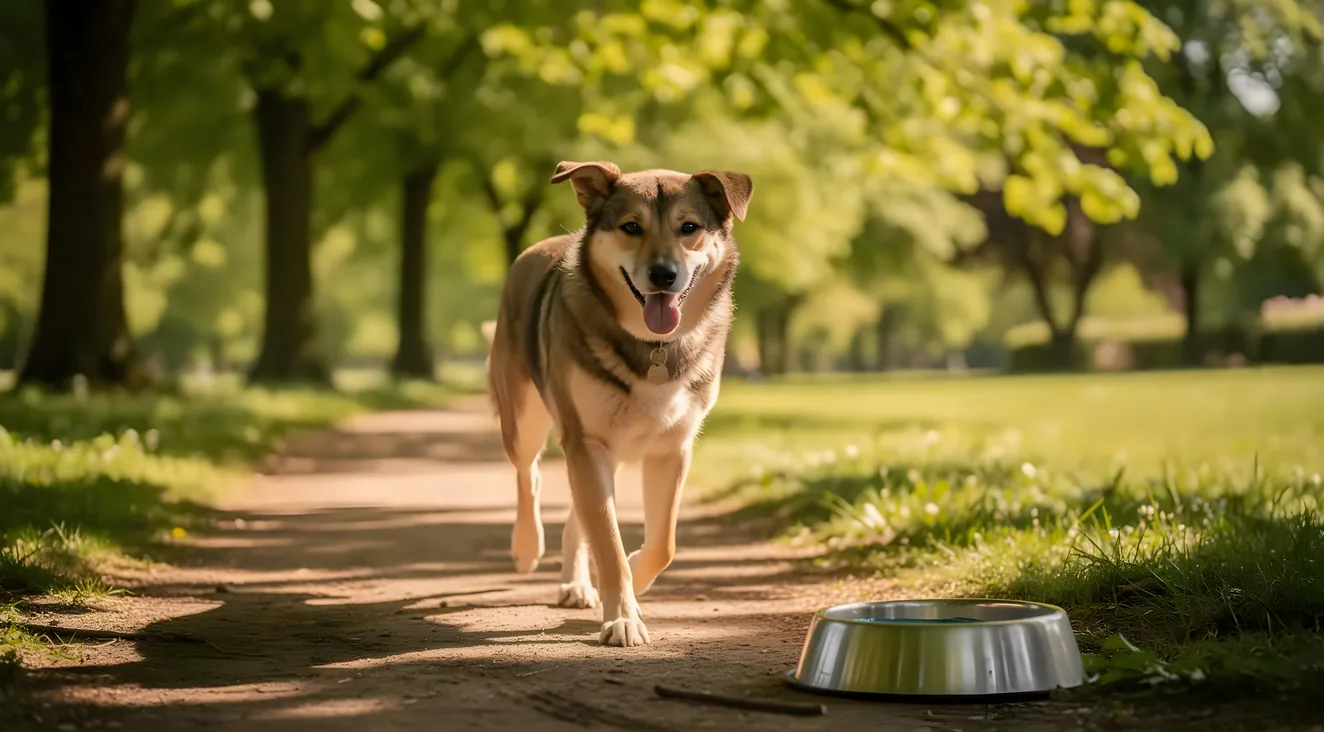
Dog Walking Safety Tips for Melissa's Texas Heat & Weather
North Texas summers push well into the upper 90s and beyond for weeks at a time, and pavement gets far hotter than the air temperature around it. Before anything else on this list, learn the five-second rule: press the back of your hand against the pavement and hold it there. If you can't keep it down for five full seconds, it's too hot for your dog's paws too. Asphalt and concrete can reach 140 to 150 degrees on a sunny afternoon even when the air feels manageable, and that's hot enough to burn paw pads in minutes.
Best Times to Walk in Summer
Walking early, before roughly 9am, or later in the evening, after about 7pm, avoids the worst of the day's heat and gives the pavement time to cool down from direct sun exposure. Midday walks during a Texas summer aren't just uncomfortable, they're a real risk, especially for short-nosed breeds, older dogs, and dogs carrying extra weight, all of which struggle more to regulate body heat. If a walk absolutely has to happen midday, stick to shaded routes and keep it short.
Hydration on the Walk
Bring water on any walk longer than 15 or 20 minutes during summer months, even for a route your dog has done a hundred times before. A collapsible travel bowl makes this easy. Offer water at the halfway point of longer walks rather than waiting until the end, and again immediately after finishing. Dogs don't always drink enough on their own initiative when they're hot and panting, so offering water proactively matters more than waiting for them to ask.
Paw Protection
Beyond the five-second pavement test, watch for your dog favoring a paw, limping, or licking at their feet after a walk, all signs that the ground was too hot even if the walk seemed fine at the time. Walking on grass instead of asphalt or concrete when a route allows it reduces the risk significantly. Some owners use dog boots for consistently hot conditions, though not every dog tolerates them well; if boots aren't an option, timing the walk earlier or later in the day is the more reliable fix.
Recognizing Heat Stroke Signs
Heavy panting that doesn't ease up, bright red gums or tongue, drooling more than usual, wobbliness or disorientation, and vomiting are all warning signs that a dog is overheating and needs immediate attention. If you notice any of these during a walk, stop immediately, move to shade, offer small amounts of water, and cool the dog with a damp towel on the belly, neck, and paws while heading to a vet. Heat stroke in dogs can escalate quickly, and it's a genuine emergency, not something to wait out.
Certain dogs face higher risk than others: flat-faced breeds like bulldogs and pugs, senior dogs, overweight dogs, and dogs with thick double coats all overheat faster than the average dog. If your dog falls into one of these categories, shorter walks at cooler times of day matter even more. Our guide to senior dog walking services covers pacing and care adjustments specific to older dogs, many of which apply directly to summer heat management.
Winter Safety
Texas winters are mild compared to most of the country, but cold snaps still happen, and a sudden freeze catches people off guard more than a gradually cooling climate would. Watch for ice on sidewalks and driveways after a freeze, keep walks a bit shorter during genuinely cold spells, and pay attention to shivering or reluctance to walk as signs your dog is uncomfortable in the cold. Short-haired and smaller breeds feel a Texas cold snap more acutely than you might expect.
General Safety on Every Walk
Wildlife. Melissa's mix of newer neighborhoods and open land near creeks and green spaces means encounters with rabbits, snakes, and the occasional coyote aren't unusual, especially around dawn and dusk. Keep dogs leashed and stay alert near tall grass or wooded edges, particularly during warmer months when snakes are more active.
Other dogs. Not every dog on a walk is friendly, and not every owner has full control of their dog. Give unfamiliar dogs space, watch body language before allowing a greeting, and don't assume a loose dog is safe just because it looks calm at a distance.
Traffic. Newer Melissa subdivisions often mix in construction traffic with regular vehicle flow, and sidewalks aren't always complete on every street yet. Walk facing traffic where there's no sidewalk, use reflective gear during early morning or evening walks when visibility is lower, and stay alert at driveways where a driver backing out may not see a dog at leash height.
For route ideas that account for shade, terrain, and green space, our guides to dog parks in Melissa and dog-friendly trails cover specific local options. And our full resources hub has more guides on choosing a walker, what a first visit looks like, and typical costs, if you're considering hiring help to manage summer walk timing on your behalf.
Frequently Asked Questions
How hot does pavement get in a Texas summer?
Pavement in direct sun can reach 140 to 150 degrees on a hot afternoon, even when the air temperature feels manageable. Use the five-second hand test before assuming a route is safe.
What time of day is safest to walk a dog in summer?
Before roughly 9am or after 7pm, when both air and pavement temperatures have dropped from their midday peak.
What are the first signs of heat stroke in a dog?
Heavy, prolonged panting, bright red gums, excessive drooling, and wobbliness or disorientation are early warning signs that require immediate cooling and, often, a vet visit.
Do all dogs face the same heat risk?
No. Flat-faced breeds, senior dogs, overweight dogs, and dogs with thick coats overheat faster and need extra caution during warm months.
Is winter a real safety concern in Melissa, TX?
Less than summer, but cold snaps and occasional ice do happen. Shorter walks and attention to shivering or reluctance during genuine cold spells are worth watching for.
What wildlife should I watch for on Melissa walks?
Rabbits, snakes, and occasional coyotes near creeks or undeveloped land, particularly around dawn and dusk. Keep dogs leashed near tall grass or wooded edges.
Should I bring water on every walk?
For anything longer than 15 to 20 minutes during warm weather, yes. Offer water partway through the walk rather than waiting until you're finished.