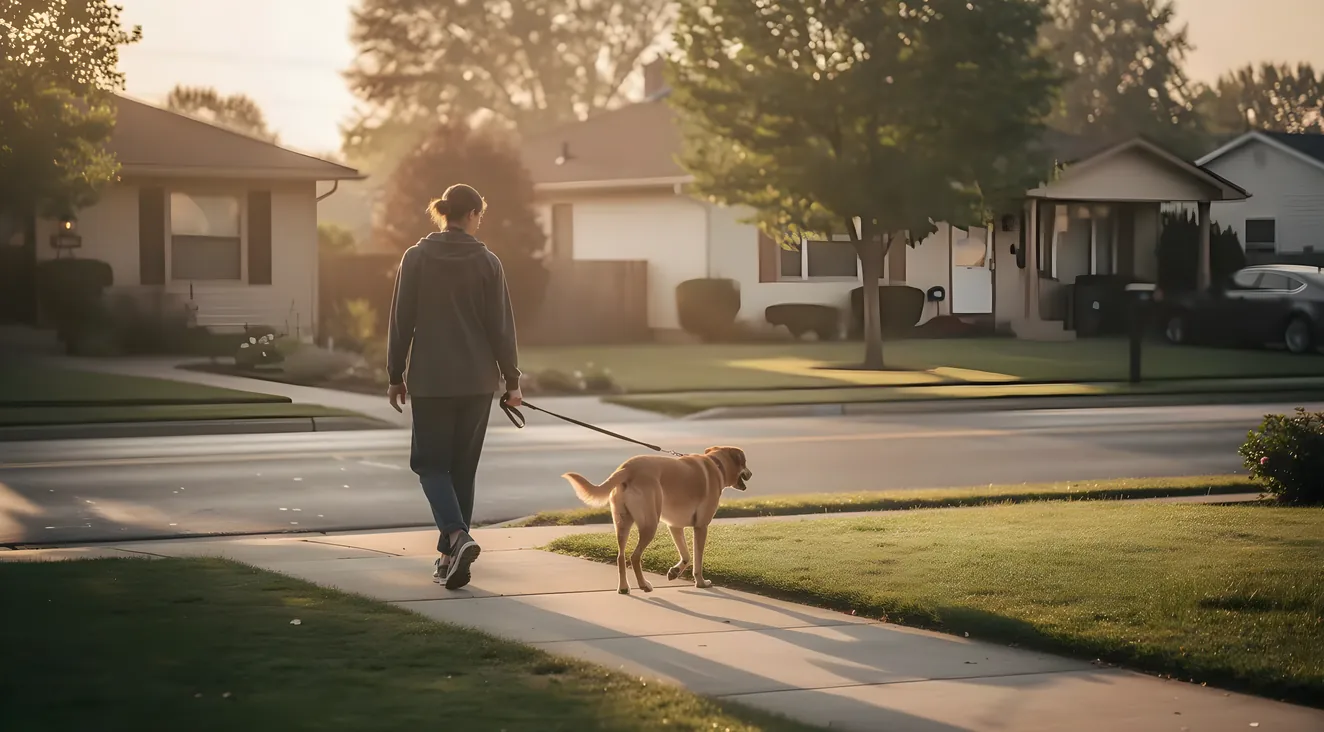
Solo Dog Walks in Melissa, TX
A solo dog walk means exactly what it sounds like: one walker, one dog, no other animals along for the route. It's the most straightforward walking format available, and for a lot of dogs and situations, it's also the right one.
When One-on-One Walks Make the Most Sense
Solo walks are the default recommendation for dogs that don't do well around unfamiliar animals. A dog that's reactive toward other dogs, easily overwhelmed in group settings, or still working through behavior issues benefits from a walker's undivided attention rather than the added stimulation of a pack.
The same goes for dogs with special needs. A dog recovering from surgery, managing a chronic condition, or navigating mobility limitations needs a walker who can watch closely and adjust pace or distance on the fly, something a group format makes harder to manage well. Dogs in active training also do better one-on-one, since a walker can reinforce specific commands and leash habits without the distraction of other dogs nearby.
What to Expect From a Private Walk
A solo walk session usually starts with the walker letting your dog out, confirming any specific instructions, and heading out on a route sized to your dog's energy and needs. Because it's just the two of them, the walker can adjust pace, take detours your dog seems interested in, or cut things short if your dog seems off that day, decisions that are much harder to make in the middle of a group.
Solo walks also give a walker room to work on training goals during the walk itself: practicing loose-leash technique, reinforcing recall cues in a safely enclosed space, or simply building trust with a dog that's still getting used to a new person handling their leash.
Solo Walks for Anxious or Newly Adopted Dogs
Dogs that are new to a household, recently adopted from a shelter, or generally anxious around people and animals often do best starting with solo walks before any group format is considered. Building a one-on-one relationship with a consistent walker gives an anxious dog a predictable, low-stimulation routine to settle into. Once that trust is established, some dogs eventually transition to group walks if their temperament supports it, though plenty of dogs are simply happier sticking with solo visits long-term.
Choosing Solo Over Group
The right format comes down to your dog's specific temperament and needs, not a general preference for one style over the other. Reactive dogs, dogs in training, seniors with mobility changes, and dogs recovering from illness or injury tend to do best with the focused attention a solo walk provides. If you're weighing the tradeoffs between formats, our group dog walk guide breaks down the other side of that comparison, and senior dog walking covers how solo visits work specifically for older dogs.
When you're ready to find a match, browse the full directory of Melissa dog walking services and filter for walkers who offer one-on-one visits.
Frequently Asked Questions
What's the difference between solo and group dog walks?
A solo walk is one walker with one dog, while a group walk combines several dogs on a shared route led by the same walker.
Are solo walks better for reactive dogs?
Yes, generally. A solo walk gives the walker full attention to manage a reactive dog's behavior and route choices without the added stimulation of other dogs.
Do solo walks cost more than group walks?
Typically, yes, since a walker's time isn't split across multiple dogs. The tradeoff is more individualized attention and flexibility during the walk.
Can I request the same walker every time for a solo walk?
Most Melissa walkers try to keep the same walker assigned to a standing solo schedule, since consistency helps build trust with your dog and keeps routines predictable.
Is a solo walk right for a senior or special-needs dog?
Often, yes. Solo walks let a walker adjust pace and distance closely, which matters more for dogs managing joint issues, recovery, or other special needs. See our senior dog walking guide for more detail.
How do I know if my dog needs solo walks instead of group walks?
If your dog reacts poorly to other dogs, is in active training, or has a medical condition that needs close monitoring, solo walks are usually the safer starting point.