Mental Stimulation for Dogs Through Daily Walks
A walk isn't just physical exercise for a dog. It's one of the richest sources of mental stimulation they get all day. The mental benefits of walking your dog often get overlooked in favor of the physical ones, but for a lot of dogs, especially ones who spend most of the day indoors, the mental workout a walk provides matters just as much as the calories it burns.
Sniffing as Mental Exercise
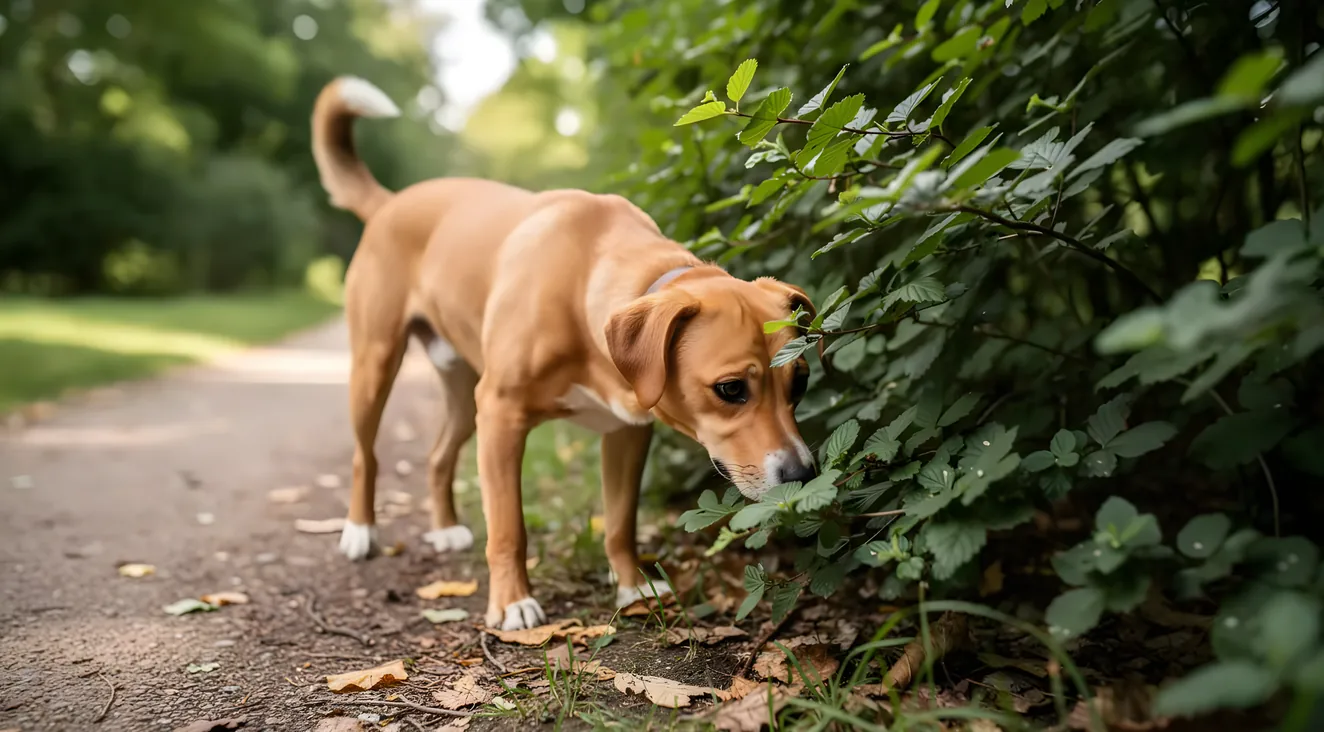
A dog's sense of smell is dramatically more powerful than a human's, and their brain devotes a huge amount of processing power to interpreting scent. When a dog stops to sniff a fence post, a patch of grass, or a spot where another dog recently passed, they're gathering information: who was here, how long ago, what mood they might have been in. That's not idle behavior. It's a dog reading their environment the way a person might read a newspaper.
Letting a dog sniff freely during at least part of a walk, rather than marching briskly the whole way, gives them a mental workout that's genuinely tiring in a good way. Trainers and behaviorists often point out that a walk built around sniffing can leave a dog just as satisfied and settled as a longer, faster walk with no time to explore, because the mental effort of processing all that scent information adds up.
Environmental Enrichment Beyond the Yard
A backyard, no matter how big, offers a fixed, unchanging set of sights, sounds, and smells. A walk introduces new ones constantly: a different route, a neighbor's dog, a lawn that was just mowed, a squirrel crossing the sidewalk. This kind of environmental enrichment matters for a dog's overall wellbeing, not just their entertainment. Dogs are naturally curious animals, and novelty gives their brain something to engage with beyond the routine of eating, resting, and playing with the same toys.
Varying the walking route, when possible, adds even more of this enrichment. A dog who always walks the same block eventually has less new information to process each time, while a dog whose route changes regularly, or who occasionally gets taken somewhere new like a trail or a different neighborhood, gets a steadier supply of mental engagement.
What Happens When Dogs Don't Get Enough Mental Stimulation
Boredom in dogs doesn't look like a person yawning on the couch. It shows up as behavior owners often misread as misbehavior: chewing on things that aren't toys, digging, barking at nothing obvious, or a kind of restless pacing that doesn't ease up even after a physical walk. A dog who gets plenty of physical exercise but very little mental engagement can still end up under-stimulated, because the two aren't interchangeable.
Chronic under-stimulation can also affect a dog's mood over time. Dogs who don't get enough novelty or problem-solving in their day sometimes become more anxious or more prone to overreacting to small changes in routine, simply because their brain isn't getting the regular workout that helps them handle stress well. A well-rounded walking routine that includes time to sniff, explore, and take in new surroundings addresses this in a way a purely physical walk doesn't.
Types of Walks That Maximize Mental Engagement
Sniff walks, where the pace slows down and the dog is allowed to explore scent at their own speed, are one of the most mentally tiring types of walks a dog can get, even at a slow pace and short distance.
Route variation keeps a walk mentally fresh by introducing new sights and smells regularly instead of repeating the exact same path every day.
Trail and adventure walks in more natural settings, with varied terrain, wildlife scents, and less predictable surroundings, tend to offer even more mental stimulation than a standard neighborhood loop.
Walks with controlled social contact, whether with familiar dogs or new ones, add a layer of social problem-solving that a solo walk doesn't provide.
Building Mental Stimulation Into a Regular Routine
The easiest way to add mental stimulation to a walking routine is to build in time for sniffing rather than treating every walk as a straight-line exercise session. Even five extra minutes of unhurried exploration can make a noticeable difference in how settled a dog is afterward. For owners who want to add more variety and terrain, adventure walks offer a change of scenery that a standard neighborhood route can't match.
Mental stimulation works best alongside the physical health benefits of walking and the calming effect of a consistent routine. Together, they cover most of what a dog needs from a daily walk. Learn more about the full range of walking benefits on our benefits page.
Frequently Asked Questions
Is a slow sniff walk as good as a fast, structured walk?
For mental stimulation, often yes. A slow walk that allows plenty of sniffing can tire a dog out mentally even if the physical distance covered is shorter than a brisk walk.
How much time should I let my dog sniff during a walk?
There's no fixed rule, but allowing at least part of the walk, five to ten minutes or more, for unhurried sniffing gives most dogs a meaningful mental workout.
Can mental stimulation replace physical exercise?
No, dogs need both. Mental stimulation supports overall wellbeing, but it doesn't replace the cardiovascular and muscular benefits that come from sustained physical movement.
Does route variation really make a difference?
Yes. Even small changes, like walking the block in the opposite direction, introduce new smells and sights that keep a walk mentally engaging rather than repetitive.
How can I tell if my dog is bored versus just tired?
A bored dog often seeks out stimulation on their own, through chewing, digging, or restless pacing, even after resting, while a genuinely tired dog tends to settle and sleep.
Are puzzle toys a substitute for mental stimulation on walks?
Puzzle toys can add mental engagement at home, but they don't replace the sensory richness of an outdoor walk, which combines scent, sound, sight, and movement in a way no indoor toy can fully match.
Do older dogs still need mental stimulation from walks?
Yes, and it may matter even more for senior dogs, since mental engagement supports cognitive health as dogs age, even if their walks need to be shorter and gentler physically.