How to Choose a Dog Walker in Melissa | What to Look For
Handing someone a key to your house and trust with your dog is a bigger decision than most service hires. Price matters, but it shouldn't be the first filter. Before you compare rates, check for insurance and bonding, ask how the walker screens their staff, and run a meet-and-greet before your dog's first solo walk. Here's what separates a reliable provider from one you'll regret hiring.
Credentials That Actually Matter
Insurance and bonding. A legitimate dog walking business carries liability insurance and is bonded. Insurance covers you if your dog is injured or your property is damaged during a visit. Bonding protects against theft or dishonest acts by an employee. Ask for proof of both, not just a verbal assurance. A provider with nothing to hide will produce documentation without hesitation.
Pet CPR and First Aid certification. This one gets overlooked constantly, and it shouldn't. Dogs overheat, choke, get into something toxic, or injure themselves on a walk. A walker trained in pet CPR and first aid knows what to do in the ten minutes before you or a vet can be reached, and that gap is often the difference in an emergency.
Background checks. Ask directly whether the company runs background checks on every walker who might visit your home, not just the owner. A company that background-checks its full staff, not only its founders, is treating your home and your dog with the seriousness the job requires.
Experience and specific training. General "dog lover" enthusiasm is not the same as trained experience with leash handling, reading dog body language, or managing a reactive or anxious dog. Ask how long the walker or company has operated, and whether staff receive any structured training beyond on-the-job learning.
Red Flags to Watch For
A few warning signs are worth taking seriously enough to walk away:
- Vague answers about insurance. "We're fully covered" without a willingness to show documentation is a dodge, not an answer.
- No meet-and-greet offered. A provider willing to start walking your dog without ever meeting the dog first is skipping the single most important safety step in the entire process.
- Reluctance to share references. Established providers usually have current clients willing to speak briefly about their experience. Hesitation here is worth noting.
- Inconsistent staffing with no explanation. If you're told a different person might show up each visit with no clear process for how that person is vetted or introduced, ask more questions before booking.
- Pressure to book immediately. A trustworthy provider wants your dog to be a good fit for their service as much as you want a good fit for your dog. Urgency to close the sale before answering your questions is a signal, not a coincidence.
Why the Meet-and-Greet Matters
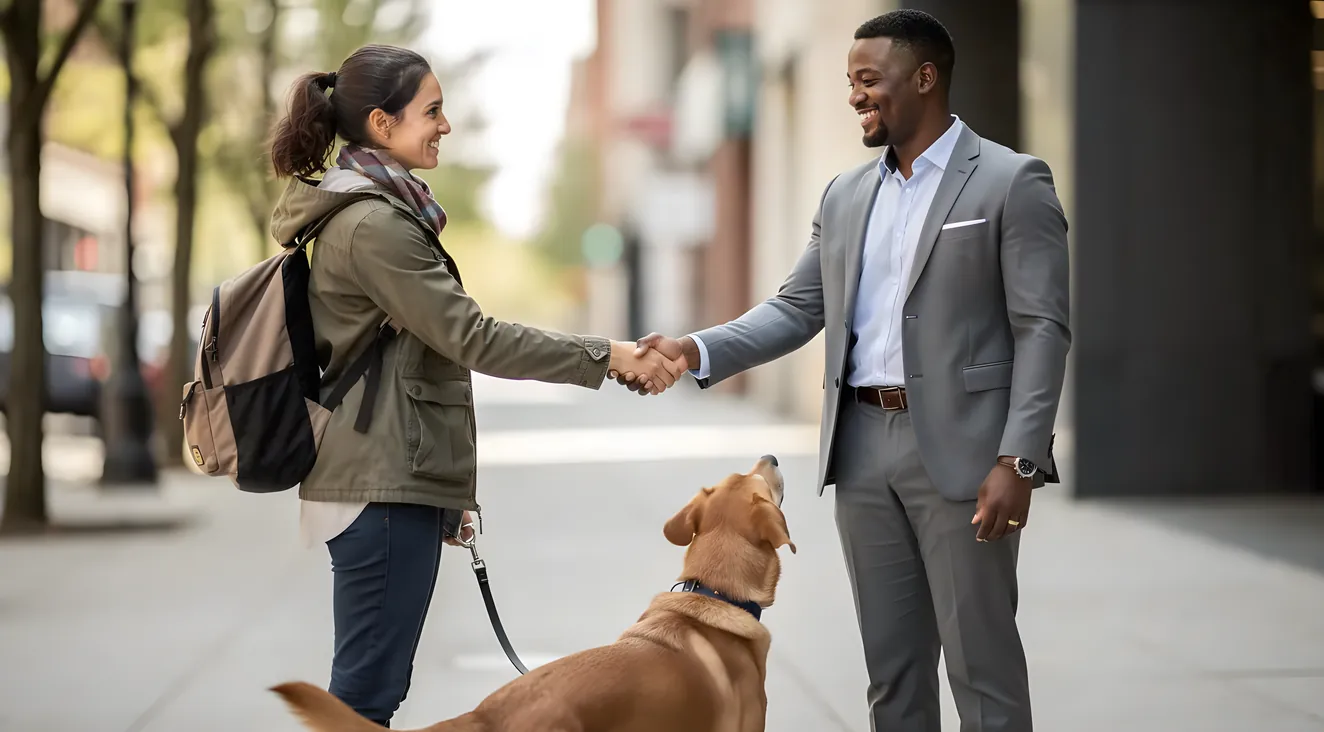
A meet-and-greet is a short, no-obligation visit where the walker comes to your home, meets your dog, and walks through your routine before any paid visits begin. It matters for a few concrete reasons. It lets you watch how the walker actually interacts with your dog, calm and confident, or hesitant and unsure. It lets your dog get a first exposure to a new person in a low-stress setting rather than being handed off cold on day one. And it gives you a chance to walk through the practical details: where the leash is kept, how the door locks, whether your dog pulls, and what commands your dog already knows.
Any provider who skips this step, or treats it as optional friction rather than a standard part of onboarding, is telling you something about how they approach the rest of the relationship. For a full walkthrough of what a good first visit looks like, see our guide on what to expect during your dog's first professional walk.
Checking References the Right Way
A phone number for a "happy client" isn't much on its own. When you do talk to a reference, ask specific questions rather than open-ended ones: How long have you used this walker? Has the schedule ever changed without notice? Has your dog ever come home upset or unusually tired? Would you leave a house key with them again? Specific answers tell you far more than a general "we love them."
Online reviews are useful too, but read past the star rating. Look for reviews that mention specifics, punctuality, communication after each visit, how the walker handled an unexpected situation, rather than generic praise. A pattern of detailed, similar praise across many reviews is a good sign. A pattern of vague five-star ratings with no detail tells you less than it looks like it does.
Employee vs. Independent Contractor Model
This distinction changes more than you'd expect. Companies that hire walkers as employees typically run their own background checks, provide training, and carry insurance that covers the company's staff directly. You're contracting with the business, and the business is accountable for who shows up.
Independent contractor platforms, where individual walkers sign up and are matched to clients through an app, place more of the vetting responsibility on the platform's screening process, which varies widely and isn't always as thorough. You're often contracting more directly with the individual, which can mean less consistency if that person becomes unavailable.
Neither model is automatically better, but you should know which one you're hiring into. Ask directly: "Is my walker an employee of your company, or an independent contractor matched through a platform?" The answer shapes who's accountable if something goes wrong.
Putting It Together
Start with credentials: insurance, bonding, background checks, and pet first aid training. Insist on a meet-and-greet before the first paid walk. Check references with specific questions, not general ones. And understand whether you're hiring a company or an individual contractor before you commit. Once you've narrowed your options, our list of questions to ask a dog walker before hiring covers exactly what to raise during that first conversation, and our pricing guide helps you compare quotes against what's actually included.
Frequently Asked Questions
What credentials should a dog walker have?
At minimum, look for liability insurance, bonding, and background checks on all staff who might visit your home. Pet CPR and First Aid certification is a strong additional signal that a provider takes safety seriously.
Is a meet-and-greet really necessary?
Yes. It's the clearest way to see how a walker interacts with your dog before you're relying on them, and it gives your dog a calm first introduction instead of a cold start on the first paid visit.
Should I hire an independent contractor or a company?
Both can work well. The key difference is accountability: a company typically handles background checks, training, and insurance directly, while contractor-matching platforms place more of that responsibility on the platform's own screening process.
How do I check references properly?
Ask specific questions rather than general ones: how long they've used the service, whether the schedule has ever changed without notice, and whether they'd trust the walker with a house key again.
What's a major red flag when hiring a dog walker?
Reluctance to show proof of insurance, no meet-and-greet offered, or pressure to book immediately without answering your questions are all signs worth taking seriously.
Do all dog walkers carry insurance?
No. Insurance is common among established providers but not universal, especially among individuals just starting out. Always ask for proof rather than assuming.
How many references should I check before hiring?
Two or three is usually enough to spot a pattern, whether consistently positive with specific detail, or vague and inconsistent.