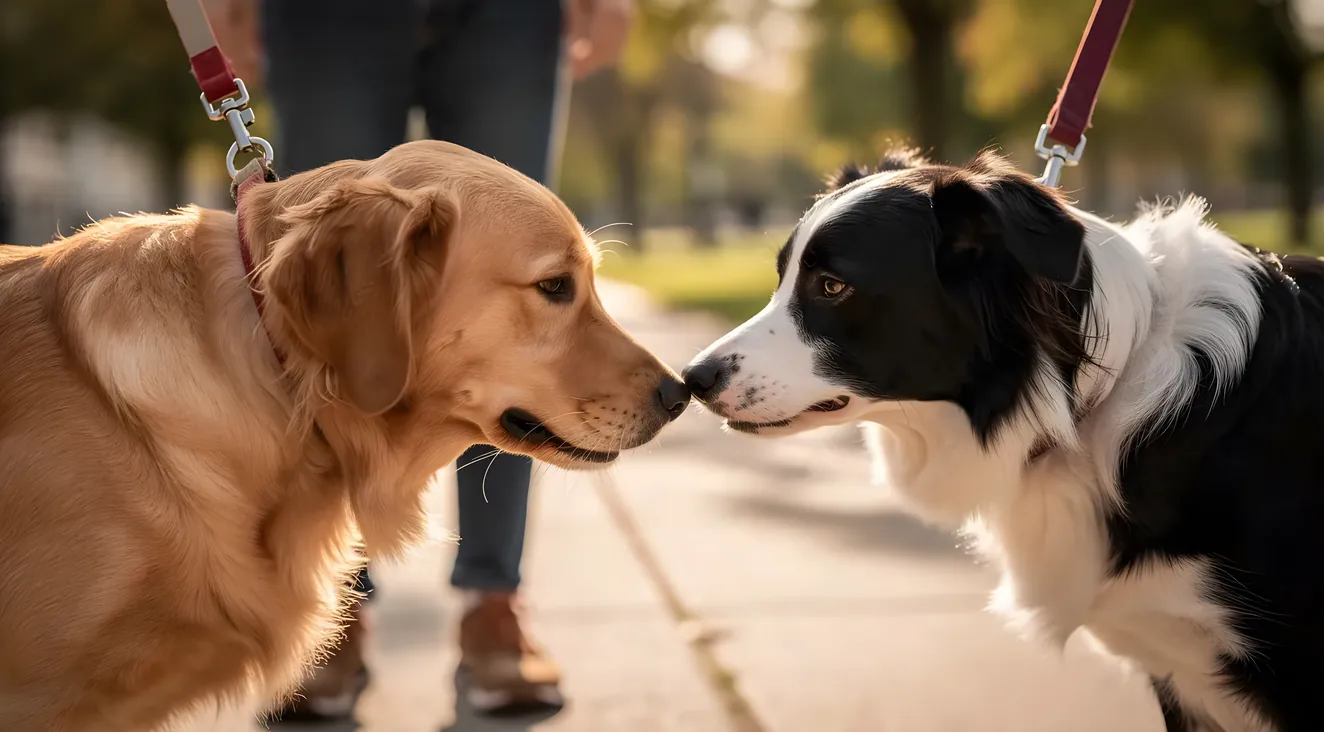
Dog Socialization Through Walking: Why It Matters
Walking is one of the easiest ways to keep a dog socially confident, because it puts them in front of the exact things they need practice with: other dogs, unfamiliar people, traffic, noise, and new environments. A dog who walks regularly in varied settings tends to stay calmer around the unexpected, while a dog whose world is limited to the backyard often becomes more reactive or fearful as new experiences pile up all at once instead of gradually. The benefits of group dog walking in particular come from controlled, repeated exposure to other dogs in a structured setting, which is harder to replicate any other way.
What Walks Expose Dogs To
A walk around the block puts a dog in contact with far more than most people realize. There's the mail carrier, a jogger, a skateboard, another dog on a leash, a car door slamming, kids on bikes. Each of these is a small lesson in how to handle something new without panicking. Dogs who get this kind of exposure regularly build a mental library of "things that turned out to be fine," which makes the next new thing less alarming.
Group walks add another layer. When a dog walks alongside other dogs, even ones they don't know well, they practice reading body language, respecting personal space, and adjusting their own behavior in response to another animal, skills that free play in a yard doesn't teach nearly as well. A dog who only ever interacts with the same one or two familiar dogs can still struggle when they meet an unfamiliar dog for the first time, because the skill they need is generalized comfort with novelty, not just comfort with a specific companion.
Critical Windows and Ongoing Socialization
Puppies go through a developmental period, roughly the first three to four months of life, when they're unusually open to new experiences and unusually quick to form lasting impressions from them. A puppy who meets a wide range of calm, well-behaved dogs and people during this window tends to grow into an adult who takes novelty in stride. A puppy who misses that window, whether from illness, isolation, or simply not being taken out much, often has to work harder later to reach the same comfort level.
That said, socialization isn't a box you check once and forget. Adult dogs benefit from ongoing exposure too. A dog who was well-socialized as a puppy but then spent a year mostly indoors can lose some of that ease and need a slower reintroduction to busy environments. Regular walks, especially ones that vary in route and include some contact with other dogs, keep those social skills sharp throughout a dog's life rather than letting them fade.
Signs of Poor Socialization vs. a Well-Socialized Dog
A poorly socialized dog often reacts to new stimuli with barking, lunging, freezing, or trying to hide behind their owner. Some dogs go the opposite direction and become overly aroused, jumping and pulling hard toward every person or dog they see because they don't have the skills to greet calmly. Both patterns usually trace back to the same root cause: not enough varied, positive exposure.
A well-socialized dog, by contrast, tends to notice new things without much drama. They might glance at a passing dog and keep walking, or approach a stranger with a loose, wagging body instead of stiff, fixed attention. They recover quickly from mild startles, like a car horn or a dropped object, instead of staying rattled for the rest of the walk. None of this means a dog has to love every interaction. A well-socialized dog can still prefer to keep their distance from other dogs. The difference is that preference, not fear, is driving the behavior.
Building Socialization Into a Walking Routine
Consistency does most of the work here. A dog who walks the same route at the same time every day will still get some socialization benefit, but rotating routes, adjusting the time of day, and occasionally walking somewhere busier all add variety that keeps a dog's social skills flexible. For dogs who do well with other animals, structured group dog walks offer a level of repeated, supervised dog-to-dog contact that's difficult to arrange casually.
Socialization also supports the behavioral benefits of a walking routine more broadly. A dog who's comfortable in the world tends to settle faster at home, bark less at passing noise, and handle changes to the household with less stress. Combined with the physical health benefits of regular walking, socialization is one more reason a daily walk earns its place in a dog's routine. See the full range of what walking does for dogs on our benefits page.
Frequently Asked Questions
At what age should puppy socialization start?
Once a puppy has had their first round of vaccinations, usually around 7 to 8 weeks, controlled, low-risk socialization can begin, such as short walks in quiet areas. Your veterinarian can advise on the right timing based on your puppy's vaccination schedule.
Can an adult dog still learn to socialize better?
Yes, though it typically takes more patience than it would with a puppy. Slow, positive exposure at a distance the dog is comfortable with, gradually decreased over time, works for most adult dogs, even ones with a history of reactivity.
Do group walks work for dogs who don't love other dogs?
It depends on the dog. Some dogs do better with structured group walks led by an experienced handler who manages spacing and pace, while others need one-on-one walks with occasional, brief distant exposure to other dogs instead.
How can I tell if my dog is anxious versus just excited around new things?
Anxious dogs tend to show tense body language: a low or tucked tail, ears pinned back, and stiff movements. Excited dogs usually look loose and bouncy, with a relaxed, wagging tail and an eager, forward posture.
Does breed affect how much socialization a dog needs?
Breed can influence temperament tendencies, but individual history and early experience matter more than breed alone. Any breed can be well-socialized or under-socialized depending on their exposure growing up.
Can too much socialization overwhelm a dog?
Yes. Overloading a young or nervous dog with too many new experiences at once can backfire and create fear instead of confidence. Gradual, positive exposure at a pace the dog can handle works better than flooding them with stimulation.
Is dog park time the same as a socialized walk?
Not quite. Dog parks offer off-leash contact but little control over which dogs your dog interacts with, while a leashed walk or a structured group walk allows for more controlled, positive introductions.